cara agar cepat hamil weigh loss: Juni 2012

Sabtu, 30 Juni 2012

Training to failure....or just short of failure? UPDATE

I'm not sure what to make of this and without the full paper it is always hard to know what it really says.  However, from the abstract they seem to be claiming that a protocol that avoids failure achieves maximum recruitment of motor units.  What is interesting is that muscle fibre recruitment was higher towards the end of the 15 rep set  - which was going to failure - than the heavy 3 rep max set.  This is the size principle at work!

The thing about failure though is that you know that you are there.  Stopping 3 reps short of failure is one thing...but unless you fail how do you know when you were 3 reps away from failure?!  Fail and then you are certain you were there.


UPDATE

James Steele has now analysed this paper and offers some very insightful comments on his blog:

To Failure or Not to Failure - That is the Question.... 


Doug McGuff's comments are also very helpful on the Body by Science blog  


Going to failure, or not, has probably been one of the most debated issues during the history of strength training. However, few studies have directly compared the physiological effect of failure vs. nonfailure strength training. The purpose of this study was to evaluate muscle activation strategies with electromyography (EMG) during heavy repetitions vs. repetitions to failure with lighter resistance.
Fifteen healthy untrained women performed a set with heavy loading (3 repetition maximum [RM]) and a set of repetitions to failure with lower resistance (∼15 RM) during lateral raise with elastic tubing. Electromyographic amplitude and median power frequency of specific shoulder and neck muscles were analyzed, and the BORG CR10 scale was used to rate perceived loading immediately after each set of exercise. During the failure set, normalized EMG was significantly lower during the first repetition and significantly higher during the latter repetitions compared with the heavy 3-RM set (p < 0.05). Normalized EMG for the examined muscles increased throughout the set to failure in a curvilinear fashion—e.g., for the trapezius from 86 to 124% maximal voluntary contraction (p < 0.001)—and reached a plateau during the final 3–5 repetitions before failure. Median power frequency for all examined muscles decreased throughout the set to failure in a linear fashion, indicating progressively increasing fatigue.

In conclusion, going to complete failure during lateral raise is not necessary to recruit the entire motor unit pool in untrained women—i.e., muscle activity reached a plateau 3–5 repetitions from failure with an elastic resistance of approximately 15 RM.

Furthermore, strengthening exercises performed with elastic tubing seem to be an efficient resistance exercise and a feasible and practical alternative to traditional resistance equipment.

When to train for optimal performance?

What time of day is best for training.  From this study it looks like the answer is .....whenever you usually train....although in general it looks like late afternoon is best for strength training.  That will be just after work then.


Abstract
This article focuses on physical performances after training at a specific time of day. To date, although the effect of time of day on aerobic performances appears to be equivocal, during anaerobic exercises, the effect of time of day has been well established with early morning nadirs and peak performances in the late afternoon. These diurnal rhythms can be influenced by several factors such as the regular training at a specific time of day. Indeed, regular training in the morning hours may increase the lower morning performances to the same or even higher level as their normal diurnal peak typically observed in the late afternoon by a greater increase of performance in the evening. However, regular training in the evening hours may increase the morning-evening (i.e., amplitude of the rhythm) difference by a greater increase of performance in the late afternoon. Therefore, adaptations to training are greater at the time of day at which training is regularly performed than at other times. Nevertheless, although modifications in resting hormones concentrations could explain this time-of-day specific adaptations, precise information on the underlying mechanisms is lacking.

Why Coffee and Alcohol make you pee....

Selasa, 26 Juni 2012

Is Obesity a disease?

If you have a couple of hours (!) you might like to watch this.   i haven't had a chance yet, but if you have let me know what you think in the comments.


This is from Obesity Panacea.


Minggu, 24 Juni 2012

A couple more studies on HIIT

These two came out last week and I thought I'd pop them up here for your interest.  Incidentally I suspect that most of the benefits of HIIT could be attained more quickly and with less risk, through proper resistance training.....but that is a different issue.

Anyway, the studies:


Twelve weeks of HIIE resulted in significant reductions in total, abdominal, trunk, and visceral fat and significant increases in fat free mass and aerobic power.

The actual protocol was quite tough by the look of it:

Subjects in the exercise group completed supervised exercise (8 s sprint, 12 s recovery) continuously throughout each 20-min session. The HIIE workload was set at 80–90% of each subject’s heart rate (HR) peak at a cadence between 120 and 130 r.p.m and recovery was set at the same amount of resistance but at a cadence of 40 r.p.m. Subjects were instructed to keep their exercise intensity at a level necessary to produce a HR between 80–90% of HR peak. As subjects adapted to HIIE training, workload was increased so HR stayed at the appropriate 80–90% HR peak level. HIIE was coordinated with a prerecorded compact disc counting down each sprint in a 3-2-1 manner. Subjects performed a 5-min warm-up and cool-down on the bike prior to and after each exercise session. All training cycling data included continuous recording of HR and r.p.m, whereas rating of perceived exertion [13] (RPE) was assessed at 5-min intervals. 

High-intensity interval training and hypertension: maximizing the benefits of exercise?

Essential arterial hypertension is the most common risk factor for cardiovascular morbidity and mortality. Regular exercise is a well-established intervention for the prevention and treatment of hypertension. Continuous moderate-intensity exercise training (CMT) that can be sustained for 30 min or more has been traditionally recommended for hypertension prevention and treatment. On the other hand, several studies have shown that high-intensity interval training (HIT), which consists of several bouts of high-intensity exercise (~85% to 95% of HR(MAX) and/or VO(2MAX) lasting 1 to 4 min interspersed with intervals of rest or active recovery, is superior to CMT for improving cardiorespiratory fitness, endothelial function and its markers, insulin sensitivity, markers of sympathetic activity and arterial stiffness in hypertensive and normotensive at high familial risk for hypertension subjects. This compelling evidence suggesting larger beneficial effects of HIT for several factors involved in the pathophysiology of hypertension raises the hypothesis that HIT may be more effective for preventing and controlling hypertension. 

Sabtu, 23 Juni 2012

Zen of the Barbell

Leo Babauta has a good post today on his Zen habits blog:

The Zen of the Barbell


The barbell sits there, inert, not wanting anything, not expecting anything of me. It becomes a simple tool, one that must only be lifted up, against the forces created by a massive Earth, and put back down. A simple tool that is practice for a way of living — a bell of mindfulness.

Senin, 18 Juni 2012

Sabtu, 16 Juni 2012

The Incidentally Gluten Free Cookbook

Just what we all need, another cookbook!  Everyone seems to be publishing books at the moment, particularly in the "Paleo" niche.  Most don't add much to the sum of human knowledge. I wanted to call your attention to this one though.

It comes from a couple of British writers - Melanie Dobromylskyj and Karla Rohde - two school-friends who have pulled together a superb compendium of gluten free recipes in The Incidentally Gluten Free Cookbook. 

This is a real paper book, not a cheap pdf (although cheap pdfs are not all bad) which through its 12 chapters presents a mouthwatering array of food that you can eat if you are avoiding gluten.

As an aside here I better mention that I am - as far as I can manage - gluten free.  A couple of years ago I was getting more and more IBS.  Stomach cramps, poor digestion and diarrhoea were regular companions which went when I cut out wheat.  No beer, bread or pasta.  No pastry..... thats it really.  As long as I avoid them I am fine.  I went to the doctor and they did a test for celiac disease - which my uncle has - and it came back negative.  However the doctor said that with IBS if you avoid something and it makes it better - i.e. wheat for me - then avoid it...so I do. 
Interestingly Bizarro et al in a fairly recent review - Cutting-edge issues in celiac disease and in gluten intolerance - showed that gluten sensitivity shares similar symptoms with celiac, and exists as a separate condition.
The book gives you 12 sections:
  1. Fish dishes
  2. Chicken
  3. Pork
  4. Lamb and Mutton
  5. Beef
  6. Vegetarian
  7. Soups and Sides
  8. Others (e.g. chutneys and spanish torillas)
  9. Puddings
  10. Cakes and biscuits - here is where they get into their stride!  You can tell that they like baking
  11. Christmas food and drink - fancy Vanilla Kipferl?!
  12. Useful Information

In the last chapter there is a nice explanation of Why Gluten is so Bad for So Many of Us written by Melanie's husband Peter.  (Peter has some degree of fame in the world of the internet through his blgo Hyperlipid and I had the pleasure of visiting him and Melanie a couple of years ago when they were living in Scotland.)  This section is really well drafted looking at some key problems that can be traced to gluten consumption for some people - for example leaky gut, autoimmune disease, a "stress" response in the gut.

There is all sorts of stuff in this book, with some excellent photos too!   If you want a taste of the sort of things in the book, check out the blog Critters and Cake where some of the recipes are shared.  Amid all the paleo orthorexia this is a nice old fashioned recipe book which makes you feel all warm and cozy, with memories of cake and biscuits on cold winters afternoons after school.

It is not a cheap book.  You can blame that on Lulu, but that being said it is really good quality - nicely printed on good quality paper and it looks good in my kitchen!
a scale, pepper, olive oil and rice wine vinegar....oh and a recipe book!


Anyway, to sum up it is a great book and is highly recommended by me!  Get your copy via Lulu through this link:   The Incidentally Gluten Free Cookbook


Strength and hypertrophy...are the hormones important?

I think I tweeted one of the press reports of this yesterday,  but as the whole paper is available as an Open Access pdf I thought I'd point to it formally on the blog.

The paper is

Associations of exercise-induced hormone profiles and gains in strength and hypertrophy in a large cohort after weight training

The purpose of this study was to investigate associations between acute exercise-induced hormone responses and adaptations to high intensity resistance training in a large cohort (n = 56) of young men. Acute post-exercise serum growth hormone (GH), free testosterone (fT), insulin-like growth factor (IGF-1) and cortisol responses were determined following an acute intense leg resistance exercise routine at the midpoint of a 12-week resistance exercise training study. Acute hormonal responses were correlated with gains in lean body mass (LBM), muscle fibre cross-sectional area (CSA) and leg press strength. There were no significant correlations between the exercise-induced elevations (area under the curve—AUC) of GH, fT and IGF-1 and gains in LBM or leg press strength. Significant correlations were found for cortisol, usually assumed to be a hormone indicative of catabolic drive, AUC with change in LBM (r = 0.29, P < 0.05) and type II fibre CSA (r = 0.35, P < 0.01) as well as GH AUC and gain in fibre area (type I: r = 0.36, P = 0.006; type II: r = 0.28, P = 0.04, but not lean mass). No correlations with strength were observed. We report that the acute exercise-induced systemic hormonal responses of cortisol and GH are weakly correlated with resistance training-induced changes in fibre CSA and LBM (cortisol only), but not with changes in strength.

Whatever causes increased strength and muscle growth, it seems that it is not down to changes in the hormones relating from resistance training.

In the first study, researchers examined the responses of both male and female participants to intense leg exercise. Despite a 45-fold difference in testosterone increase, men and women were able to make new muscle protein at exactly the same rate.

"Since new muscle proteins eventually add up to muscle growth, this is an important finding," says West.

"While testosterone is definitely anabolic and promotes muscle growth in men and women at high doses, such as those used during steroid abuse, our findings show that naturally occurring levels of testosterone do not influence the rate of muscle protein synthesis."

In the second study, researchers analyzed the post-exercise hormonal responses of 56 young men, aged 18 to 30, who trained five days a week for 12 weeks in total.

The men experienced gains in muscle mass that ranged from virtually nothing to more than 12 pounds, yet their levels of testosterone and growth hormone after exercise showed no relationship to muscle growth or strength gain.

Surprisingly, the researchers noted that cortisol—considered to have the opposite effect of anabolic hormones because it reduces protein synthesis and breaks down tissue—was related to the gain in muscle mass.

"The idea that you can or should base entire exercise training programs on trying to manipulate testosterone or growth hormone levels is false," says Stuart Phillips, a professor in the Department of Kinesiology. "There is simply no evidence to support this concept."  from Eureka

Now there is some fascinating stuff there.  
  • Natural levels of testosterone - don't have an impact.  Steroids will blow you up OK, but you can't blame you age (lowered testosterone levels) or your sex.
  • Natural levels - i.e. promoted by exercise - of GH and testosterone - were not related to either muscle growth or strength.
  • Cortisol - the scary stress hormone that we are supposed to minimise due to its catabolic effects - was associated with hypertrophy.  
So what do we do with this?

As Philips says, theories that it is all down to the usual hormones - testosterone and GH - may be wrong but stress from training - cortisol promoting - may have a role.  Training to produce stress...failure?  HIT perhaps?

Strength and insulin resistance

In all the discussions about how different diets may or may not promote insulin resistance, one thing that often gets missed out of the discussion is the role of the muscles.  Empty the muscles of glycogen through hard exercise and they will get more insulin sensitive to suck up the sugar out of the blood.  (Nigel has been trying to explain this but that is a different topic)

It is something that I talk about in Hillfit as a side benefit of strength training and an issue that Doug McGuff and John Little go into in Body by Science

Anyway, interesting to see this study come through this morning - at least some association between strength levels and markers of insulin sensitivity

Muscular strength and markers of insulin resistance in European adolescents: the HELENA Study

The aim of the study was to examine the association of muscular strength with markers of insulin resistance in European adolescents. The study comprised a total of 1,053 adolescents (499 males; 12.5–17.5 years) from ten European cities participating in the Healthy Lifestyle in Europe by Nutrition in Adolescence (HELENA) Cross-Sectional Study. Muscular strength was measured by the handgrip strength and standing long jump tests. Cardiorespiratory fitness was measured by the 20-m shuttle run test. Fasting insulin and glucose were measured and the homeostasis model assessment (HOMA) and quantitative insulin sensitivity check index (QUICKI) indices were calculated. Weight, height, waist circumference and skinfold thickness were measured, and body mass index (BMI) was calculated. In males, the handgrip strength and standing long jump tests were negatively associated with fasting insulin and HOMA (all P < 0.05) after controlling for pubertal status, country and BMI or waist circumference. When skinfold thickness was included in the model, the association became non-significant. In females, the standing long jump test was negatively associated with fasting insulin and HOMA (all P < 0.001) after controlling for pubertal status, country and surrogate markers of total or central body fat (BMI, waist circumference or skinfold thickness). Findings were retained in males, but not in females after controlling for cardiorespiratory fitness. The findings of the present study suggest that preventive strategies should focus not only on decreasing fatness and increasing cardiorespiratory fitness but also on enhancing muscular strength.

Jumat, 15 Juni 2012

resistance training and / or aerobic exercise...what do they do to middle age muscle?

Phillips lab at  McMaster university churns these studies out!

Concurrent resistance and aerobic exercise stimulates both myofibrillar and mitochondrial protein synthesis in sedentary middle-aged men

Here they look at the impact of :
  • resistance training alone;
  • aerobic exercise alone; and
  • resistance exercise and aerobic exercise together;
in sedentary middle-aged men.  (I'm 44.  Am I middle aged yet?)

The way that I read it is that doing both together is equivalent in effect  - in most measures they were looking at, protein synthesis in the muscles mainly) to doing either resistance exercise or aerobic exercise.

Questions for discussion....

  • Why was the resistance exercise 8 sets of 8 reps?  Why not something simpler?
  • What is more time efficient?
  • Why do they always pick leg extensions?

Interview with Slimkicker

In the last couple of days I was interviewed by the boys at Slimkicker

The interview focuses on my book Hillfit:Strength and it was good to have a chance to explain more about the philosophy and the rationale behind the programme and the exercises that were chosen.


Slimkicker have been pulling together interviews with some great guys so I am in good company!   Appearing in the Nutrition section immediately after Paul Jaminet is an honour!

Anyway, please check out the interview and have a look round the rest of Slimkicker too - it looks like a fun community and useful approach to tracking your diet.

Rabu, 13 Juni 2012

Psychological Stress impairs muscular recovery

This one popped across my screen today.  Stress is always an issue with all sorts of impacts on health.  Interesting to see this study of its impact on the muscles and how they react to training:

Psychological Stress Impairs Short-Term Muscular Recovery From Resistance Exercise

PURPOSE:
The primary aim of this study was to determine whether chronic mental stress moderates recovery of muscular function, perceived energy, fatigue and soreness in the first hour following a bout of strenuous resistance exercise.
METHODS:
31 undergraduate resistance training students (age = 20.26 ± 1.34 y) completed the perceived stress scale (PSS) and Undergraduate Stress Questionnaire (USQ; a measure of life event stress) and completed fitness testing. Following 5 to 14 days of recovery, they performed an acute heavy-resistance exercise protocol (10-RM leg press test plus six sets: 80-100% of 10-RM). Maximal isometric force (MIF) was assessed prior to, following, and at 20, 40, and 60 min post-exercise. Participants also reported their levels of perceived energy, fatigue, and soreness. Recovery data was analyzed with hierarchical linear modeling (HLM) growth curve analysis.
RESULTS:
Life event stress significantly moderated linear (p = .013) and squared (p = .05) recovery of MIF. This relationship held even when the model was adjusted for fitness, workload, and training experience. Likewise, perceived stress moderated linear recovery of MIF (p = .023). Neither USQ nor PSS significantly moderated changes in energy, fatigue, or soreness.
CONCLUSION:
Life event stress and perceived stress both moderated the recovery of muscular function, but not psychological responses, in the first hour post strenuous resistance exercise.


I think this may well have relevance to the work of Marcora that I've poined to before.   so much of this stuff is mental.  Perceptions are so important.  When you feel stressed everything will feel harder and of course your performance will be impacted

Selasa, 12 Juni 2012

Again, strength training improves cardiovascular fitness

Following on from the paper last week from James Steele, here is another study which says that strength training improves cardio fitness:

Effects of two different quadriceps strengthening exercise approaches on cardiovascular fitness in healthy female subjects: A single blind randomized study.

Objective: There are limited number of documents showing the relations between cardiovascular fitness and muscle strength. This study aimed to determine the effects of two different quadriceps strengthening exercise approaches on cardiovascular fitness in healthy female subjects.

Methods: Forty female university students participated in this study on a voluntary basis. The participants were randomly assigned to do either isokinetic exercise (IE) or progressive resistive exercise (PRE) in two different groups. Both training schemes were performed three times a week for a period of two weeks. The subjects were given a maximum symptom limited exercise test on a treadmill before and after (each) training period.

Results: Total exercise duration increased and Borg scale level decreased significantly after training in the two groups (p < 0.05). Maximal systolic blood pressure, recovery heart rate, and recovery diastolic blood pressure decreased significantly in the IE Group (p < 0.05). Resting and recovery systolic blood pressure decreased significantly in the PRE Group (p < 0.05). Compared to PRE group, improvement for Borg Scale level, recovery heart rate and recovery diastolic blood pressure were more obvious in IE Group (p < 0.05).

Conclusions: This study demonstrated that both quadriceps strengthening methods have displayed improvements in cardiovascular fitness. Further research with larger sample groups may need to be carried out.

Senin, 11 Juni 2012

Walking Speed...Thinking Speed

I thought this was interesting.

Walking Speed May Signal Thinking Problems Ahead

A new study shows that changes in walking speed in late life may signal the early stages of dementia known as mild cognitive impairment (MCI)

Here is the abstract:

In-home walking speeds and variability trajectories associated with mild cognitive impairment

Objective: To determine whether unobtrusive long-term in-home assessment of walking speed and its variability can distinguish those with mild cognitive impairment (MCI) from those with intact cognition.

Methods: Walking speed was assessed using passive infrared sensors fixed in series on the ceiling of the homes of elderly individuals participating in the Intelligent Systems for Assessing Aging Change (ISAAC) cohort study. Latent trajectory models were used to analyze weekly mean speed and walking speed variability (coefficient of variation [COV]).

Results: ISAAC participants living alone included 54 participants with intact cognition, 31 participants with nonamnestic MCI (naMCI), and 8 participants with amnestic MCI at baseline, with a mean follow-up of 2.6 ± 1.0 years. Trajectory models identified 3 distinct trajectories (fast, moderate, and slow) of mean weekly walking speed. Participants with naMCI were more likely to be in the slow speed group than in the fast (p = 0.01) or moderate (p = 0.04) speed groups. For COV, 4 distinct trajectories were identified: group 1, the highest baseline and increasing COV followed by a sharply declining COV; groups 2 and 3, relatively stable COV; and group 4, the lowest baseline and decreasing COV. Participants with naMCI were more likely to be members of either highest or lowest baseline COV groups (groups 1 or 4), possibly representing the trajectory of walking speed variability for early- and late-stage MCI, respectively.

Conclusion: Walking speed and its daily variability may be an early marker of the development of MCI. These and other real-time measures of function may offer novel ways of detecting transition phases leading to dementia.

Size Principle / Sequential Recruitment of muscle fibres

I was re-reading Hillfit last night.   It is hard to come back to something that you wrote a few months before -  I keep thinking of ways it could be improved or things that could be expressed better.  I am going to revise it over the next few weeks and maybe also send all those that have bought it a few free bonus chapters and FAQs, but one area in particular that I thought was not expressed well was the idea of the sequential recruitment of muscle fibres / motor units and how the "size principle" leads to the way in which I recommend that you train.

SEQUENTIAL RECRUITMENT OF MOTOR UNITS - A PARABLE

In this post I am going to try out another way of explaining the ideas.  Let me know if this makes sense.
(For background reading on this I'd point towards Body by Science, this article by Carpinelli - THE SIZE PRINCIPLE AND A CRITICAL ANALYSIS OF THE UNSUBSTANTIATED HEAVIER-IS-BETTER RECOMMENDATION FOR RESISTANCE TRAINING or Clarence Bass' thoughts on the paper - Forget Heavy, Think Effort)

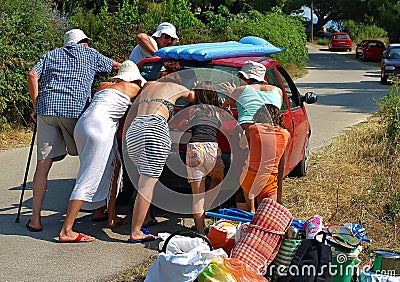
Push starting your car....with friends

Imagine that you find that your car battery is flat.  You need to push start the car.  Luckily your friends are there to help.  They are a strange group though - all athletic but with different skills, different aptitudes.  There are lots of them too; whole families of them in fact. 

  • The SLOW clan are there:  a large family, numerous lean and stringy fellas; not particularly powerful but in sports at school they had the reputation of being able to keep going for a long time before getting exhausted; and when they did get tired, they soon recovered.   They were the family that dominated cross country running, and the 5000m on the track.  There are lots of them too...it is a big family.
  • The INTERMEDIATE brothers are around as well:  there are fewer of them than the SLOW clan, but they are more powerful.  More thickset, athletic guys.  They excel at soccer, sprinting, and played on the wings in the rugby team.   They don't last as long as the SLOW guys and they take longer to get back on their feet when they do get exhausted but they have a fair bit more power.
  • ....and then there were the FAST twins :  only the two of them.....but they are a huge pair, muscles hanging off them: solid, strong and powerful.  They are strongmen - competing in powerlifting - but have no stamina.  At school they were the props in rubgy.  Walking round the pitch going from big effort to big effort.  After their big exertions they take a long time to recover...but they are certainly powerful.

Start to push that car.

You jump in the car, ready to turn the key and get the engine going.  Strangely you have parked at the bottom of a hill.  You need some help.  First on the scene are the SLOW brothers.  There are loads of them and they crowd around the car to start pushing.

Gradually the car begins to inch out of its space and move, but it is hard work pushing up that hill.  The SLOW clan have  been working hard but they have their limits and one by one they get exhausted, dropping away as the others keep pushing.

Sequential Recruitment......

You are still not going fast enough to start the car though, so you shout out to the passing INTERMEDIATE brothers who jump in and join in with the pushing.   But it is a tough hill and while you are moving more quickly  it is still not fast enough.  Now the INTERMEDIATE brothers are getting tired and they too drop out.

You still need that push though - you are not going fast enough yet - so as INTERMEDIATEs drop out finally you call over the FAST twins, who just happened to be stood near by.

They bring their bulk and power;  while the crowds of SLOW and INTERMEDIATE have dropped away, the FAST PAIR keep pushing.  Not for long though - they have pushed hard but do not last and are soon spent.  It is OK though.  At last you have enough speed and you manage to turn the engine.

In your mirror your survey a trail of bodies up the road:  SLOW, INTERMEDIATE and FAST are all exhausted...and as athletes they are all grateful for the training effect that pushing your car will have had.  They will ALL get fitter because of this effort

Recovery

Most of the SLOW guys are just about recovered now and look like they could do the same all over again.  The INTERMEDIATE brothers are starting to get back to normal too and look almost ready to go.  The FAST twins though are puffing away at the kerb - it will take some time before they are ready to go again.

But if it was a smaller car?

What if it was a smaller car, like your sister's mini?  Could you have exhausted all of that crowd?  Well the next day you find out.  There was a frost, damp in the distributor and her mini will not start.  Luckily the same bunch is around and again the SLOW clan crowd around the mini and start pushing.

The car is a lot lighter and the SLOW brothers keep pushing it along.  Some of them tire and drop out, but the car is moving quite fast and they soon recover and join in the push again.  The car keeps moving and gets faster.  Not all the SLOW brothers are pushing at the same time - there are enough of them to keep pushing even while some of them drop out for a breather, recover and then join in again.

Soon the mini starts and you are off.   SLOW were able to get her going, recycling the tired brothers into the push.  She never needed to call on INTERMEDIATE, let alone the FAST twins.  They do not get any work at all!

A heavier car?

It is a bad week for weather and the next day it is not your car, not the light mini or you sister, but a great big SUV that your neighbour has bought.

Time for another push.

Once more everyone gathers around the car.  All of the SLOW clan pushes.....but nothing happens!  The INTERMEDIATE brothers join in, all pushing in tandem.  But once more there is no movement.  It needs more power.  The FAST twins come over. Finally with all pushing in tandem the car starts to move;  but the FAST pair soon get tired.  As soon as they drop out of the push the car stops....the SLOW and INTERMEDIATE were still pushing, not tired, but not strong enough to work to exhaustion.


So lets apply that to exercise!

In an exercise your aim is to exhaust all of the motor units: SLOW, INTERMEDIATE and FAST.  As John Little says:

Retaining in our mind’s eye the purpose of exercise is to recruit and stimulate as many muscle fibers (in all categories – slow twitch, intermediate twitch and fast twitch) as possible, and that for this to occur, a muscle or group of muscles must be given a load sufficient (but not excessive) enough to initiate a sequential recruitment of fibers, and also given a time frame that permits such fibers to be recruited, the question becomes:

I'll always be skinny this isn't bad
The aim is to progress through all 3 motor unit types quickly enough to recruit them all.....but not so quickly that only the fast twitch fibres get the bulk of the stimulation......and not so slowly that the slow / intermediate twitch units can recover and recycle back into the effort, so the fast ones are never called on.

So you do not want steady state easy cardio - that only hits the slow twitch units.  Even when some get tired they recover and come back into play and you never tap into the intermediate or fast units.

And you do not want a really heavy weight where you fail immediately or after one or two reps.  Then you need to call on all of the units - slow, intermediate and fast - to fire in tandem to shift it and as soon as the fast units are exhausted you are finished without really working the others.

You need the "goldilocks" load -  enough to involve the slow units .... and then as they drop out to call in the intermediate ones and then as they fall off the fast ones come in until they are exhausted.

For example the Wall Sit!

Of course you do not actually have to move.  It is the contraction that it important....even if that is a static contraction.  Lets get back to the wall sit, one of the key moves in Hillfit  I say to hold it for between 60 and 90 seconds.


You get into position and get tight.  Your quads are contracting hard to hold you there.  Initially your slow twitch motor units are firing.  Gradually they run ou of fuel and cannot fire anymore.  They can't rest and recover though because you need to keep in that position and to do that you need more units to fire.

So the intermediate units start to work.  Finally they all drop out too - there was not as many of them and they tire faster.

Ultimately you need the fast twitch fibres to get to work.  There are not many of them and they are powerful but they tire fast.  When they are done, you fall to the floor - all of the motor units are exhausted, milked of glycogen, empty of fuel.  All sorts of signals are given metabolically and mechanically to get you growing, so that you are prepared for such an exertion in the future - your body does not like to be incapacitated and vulnerable like that so it will get stronger to protect itself.

That took maybe 90 seconds....but you worked all the units.  Next time you might need to hold some dumbbells and you might fail in 60 seconds.  If you fail in less than that you've gone too heavy - it is like pushing the SUV, the fast twitch units are needed from the start and soon drop out.


Does that make sense?

Let me know in the comments.  I am just trying to explain a key idea in a way that people will understand.

Maybe even try this:


Pain is in the brain

This is a superb video.  If you follow Todd Hargrove's blog this will not be new, but it is well presented.


via BSMPG

Kamis, 07 Juni 2012

The Wall Sit

There has been some internet drama over the last few days with Anthony criticising the barbell squat and then MAS following up with I No Longer Give a Squat About The Squat and a follow up Lower Risk Alternatives to the Barbell Back Squat

I commented on that last post explaining why I chose the Wall Sit as a key exercise in Hillfit  Here is what I said:

I chose the Wall Sit / Air Bench / Wall Sit for Hillfit for a number of reasons.

First of all it is simple to learn. Too many trainers or internet personalities present exercises that may be fine but are actually complex motor skills. Kettlebell snatches and swings for example may or may not be good exercises but they are not easy to learn without decent coaching and a lot of practice. The Wall sit is different – it is a very simple move. Once in position your task is simple – hold that position until you can’t hold it anymore, sequentially recruiting the muscle fibres.

Secondly it is a congruent exercise (in terms of Bill DeSimone’s work). At the 90 degree knee position you are at maximum moment arm for the quads, while this is also the position of maximum muscle torque – the hardest position in terms of leverage is met with the muscle being at its strongest.

Thirdly it removes much risk. Whatever the squat defenders say you are in a risky position moving with a bar on your back. I’ve seen and experienced too many slips and accidents. I’ve seen people squat without collars only to see plates slide off the bar so it flips off and cracks them in the back of the head. I’ve seen people get stuck at the bottom. In terms of duty of care I cannot recommend this move to the average person that I aimed the book at. With the Wall Sit there can be zero added load or if you do add load you can do it safely – hold dumbbells at your side or in a goblet position.

In terms of performance I either just do the timed hold, adding weight if I go over 90 seconds, or do that and immediately go into the top half of a free /air squat, the easy portion where the moment arm is less and you can keep going. I also sometimes do them Max Pyramid style: 20seconds with knees at about 60 degrees, 20 seconds with knees at 90 degrees, then 90 degrees with added weight for 20s, add weight until you can’t hold for 20 then back down, usually backing to zero load and then the 60 degrees.

Wall sits were the basic quad exercise Bill DeSimone recommended in his first book, Moment Arm Exercise which was what got me thinking of them as the basic move.

For me for most people a wall sit, plus a plank (pushup position) would be the start of all training. I also add some timed static contractions now, but that is another story.

There is a good demonstration of a wall sit at 1:19 in this video from Patrick (who I interviewed)

All in your mind, even with weights.....

I've previously pointed to the research of Dr Marcora with his psychobiological theories of fatigue.  I also highlighted Noakes paper on the role of the brain in fatigue. 

All that research seemed to focus on endurance exercise but it was interesting to see Alex point to new research that indicates that there are similar ideas at play with respect to lifting weights. 

What I thought was neat about the study was the distinction between "peripheral" and "central" fatigue: the former is the reduced ability of your muscle itself to contract, and the latter is a reduction in the signal from your brain to your muscle demanding contraction. If you pick up a heavy (above critical torque) dumbbell and lift it until you can't anymore, the limiting factor appears to be peripheral fatigue. Your muscles are simply no longer capable of contracting powerfully enough to lift the weight. In contrast, if you lift a lighter (below critical torque) dumbbell to failure, your muscles themselves fatigue to a much lesser extent, suggesting that fatigue somewhere in your brain or central nervous system is the problem.

The study is Distinct profiles of neuromuscular fatigue during muscle contractions below and above the critical torque in humans.

Rabu, 06 Juni 2012

Some experience with Hillfit

I launched Hillfit on the world about 5 months ago now in the middle of January.  It is a short ebook aimed at hikers/hillwalkers with the idea that getting a little stronger, through simple safe exercise will bring a host of benefits:  walks will be easier, safer and more fun.

I've had some good feedback from the readers of the book and it has been interesting to see the recent discussions around alternatives to the squat for safely strengthening the lower body.

Dave Riley has been posting his thoughts on his training, inspired by Hillfit:


How much weight do you lift when performing HillFit?


I reckon the weight issue is subjective in context as you have a few variables you can play around with: (1) the angle of your movements (2) the pace you do the movements and (3) then you can consider what weight to add if any. For the pelvic lift I lay a dumbbell on each thigh and rest my upper back on a bench — a fantastic experience esp if done really really slowly.


The same knapsack (mine currently weighs in with a 13 kgm sandbag) is used for both squat and pull up. The push up plank offers so many tweaks I dont need the extra weight. But even with all that the slower I go the harder all the exercises get.


How slow is 'slow'?


Since I used to do and teach Tai Chi you get a handle on ‘slow’ and while I started off counting I now rely on the slow controlled breaths. With the dumbbells it is easy to cross over with the same principles in mind.


I recommend as a guide the very practical Matt Brzycki and Fred Fornicola Dumbbell Training for Strength and Fitness. Many options offered in its pages. It also discusses weight increments.


Nonetheless, since I have been lifting kettlebells for years the HillFit perspective undermines the practice of KB swinging but I now do no-swing routines ever so slowly like clean and jerks, bow ties, etc. You can do things with the bells you can’t do so well with dumbbells — and weight is formatted by other variables because KB cause you to adapt your body while the bells are lifted through space. A great example of a slow KB lift -- at least for the very adventurous -- is the Turkish Getup.


The Toolbox


So that’s a set of dumbbells, 3 single kettlebells at different weights (but two would do), a strong towel (which I reinforced with rope) an old knapsack…and a bag of sand.


An exercise bench is also real handy.


Music and Time


And the best thing is that I know HillFit will take me under 5 minutes to complete, and my weights routine – divided into 8 sections, each of approx 90 seconds followed by 10 sec rests — will take 16 minutes. And when I’m doing it all I have to do is listen to the music — my current fav is Javanese Gamelan — sequenced into 90 sec plus 10 secs x 8. ( I edited a song to my needs using a audio edit program like Audacity).


Mp3 players are essentials I reckon. A great discovery. As essential as a dumbbell.


I mention these details because I have done so many routines over the years, had a personal trainer for two years and followed many mixes in the past — but I love this blend. At two day intervals with alternating routines it doesn’t get boring. And the set time sequences stop me from trying to be macho enough to injure myself or foster ill health upon my good person...


I’d like to box more but I am tardy. I do other stuff mainly because I like this other stuff…but the low tech supplement I think I get the most from — and which I treat as part of serious exercise — is stair running.


Show  me a stair case and I’m up it like a rat up a drainpipe.